Yazidi Women Who Escaped ISIS: Between Trauma and Social Rejection
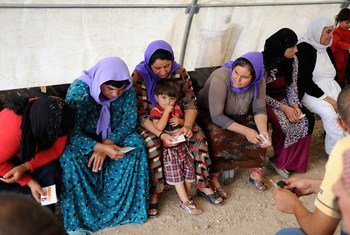
By Hussein Zainulabdeen | Independent Researcher — Iraqi Minority Rights | husseinmonitor.com
They survived enslavement. They escaped. They came home.
And then, for many Yazidi women who returned to their communities after years in ISIS captivity, the ordeal continued — not at the hands of their captors, but within their own families and communities.
This is the part of the Yazidi story that receives far less attention than the abductions, the rescue operations, and the political declarations. The return. And what happens after it.
The Scale of What Happened
In August 2014, ISIS launched a coordinated attack on the Yazidi homeland in northwestern Iraq. Thousands of women and girls were abducted and traded into sexual slavery across ISIS-held territories in Iraq and Syria. By the most careful estimates, more than 6,000 Yazidi women and children were captured in the initial wave.
Years of rescue operations, ransom payments, and military advances have brought many of them back. But "back" is not the same as "home." And "rescued" is not the same as "recovered."
What the Research Shows
A landmark study published in BMC Medicine documented the mental health of 416 Yazidi women and girls living in displacement camps in the Kurdistan Region of Iraq. The findings were stark.
More than 80% of the women and girls met the criteria for a probable PTSD diagnosis. Among those who had survived sexual enslavement, the figure was even higher — almost all of them. Depression was pervasive. And critically, perceived social rejection was found to play a significant mediating role: it worsened the relationship between traumatic events and depression symptoms, particularly among those who had been enslaved.
The conclusion was unambiguous: social rejection is not a secondary concern. It is part of the harm.
The Two Experiences: Yazidi and Turkmen
The experiences of survivors are not uniform — and the differences reveal as much about community structures as about individual trauma.
In 2014, Yazidi religious leaders issued a historic declaration formally accepting all survivors back into the faith — a decision that required courage given deeply embedded social norms around purity and honor. This declaration led to a symbolic re-baptism ceremony for survivors at Lalesh, the Yazidi holy site. It was imperfect. Social stigma did not disappear with a declaration. But it created an institutional framework for reintegration that acknowledged survivors as victims rather than sources of shame.
The situation for Shia Turkmen survivors was markedly different. There is no official record of how many Shia Turkmen women were kidnapped by ISIS from Tal Afar and surrounding areas — a silence that is itself a form of erasure. And unlike Yazidi survivors, Turkmen women who returned faced a level of social rejection that not only re-traumatized them but actively impeded their access to basic services. No equivalent religious declaration was issued. No institutional acceptance framework was created. Many were left to navigate stigma without community support or legal recognition.
The Services Gap
For Yazidi survivors, the services gap — while serious — has received some international attention. Psychosocial support programs, legal aid organizations, and international NGOs have directed resources toward this community.
For Turkmen survivors, the gap is deeper and less visible. The combination of social rejection, lack of official records, and limited institutional support has created a situation where survivors are simultaneously invisible to international organizations and exposed within their own communities.
The Iraq Yazidi Survivors Law, passed in 2021, provided a legal framework for reparations and services for Yazidi survivors. Turkmen survivors — who endured comparable crimes — were largely excluded from its scope. This disparity is not accidental. It reflects the political calculus of a government that responds to organized advocacy and international pressure, and the Turkmen community has received far less of both.
What Recovery Actually Requires
Recovery for survivors of conflict-related sexual violence requires more than medical treatment or even psychosocial support. Research consistently identifies three interconnected needs:
- Community acceptance — formal and informal signals that survivors are welcomed back, not blamed
- Legal recognition — acknowledgment by the state that a crime was committed and that survivors are entitled to redress
- Economic support — the practical means to rebuild a life, which for many survivors means access to housing, education, and employment without the burden of stigma
Iraq has made partial progress on the first and second for Yazidi survivors. For Turkmen survivors, progress on all three remains minimal.
Conclusion
The abductions of 2014 were a crime. The inadequate response to survivors' needs in the years that followed is a continuing failure — one that compounds the original harm every day that passes without accountability, recognition, and support.
Escape from ISIS was the beginning of a journey, not the end of one. For thousands of Yazidi and Turkmen women still navigating trauma, stigma, displacement, and legal limbo — that journey is not over.
The world marked the anniversary of the Sinjar massacre. It must also mark what comes after survival.
Independent Research & Analysis
Hussein Monitor
Hussein Monitor publishes in-depth field research on Iraqi minority rights, post-ISIS accountability, and the human cost of impunity. By Hussein Zainulabdeen — former UNAMI Liaison Officer and independent researcher.


Comments
Post a Comment