Iraq's Minorities and the Constitution: Rights on Paper, Reality on the Ground
By Hussein Zainulabdeen | Independent Researcher — Iraqi Minority Rights | husseinmonitor.com
"The laws guarantee rights, but they are not applied."
These words came not from a foreign critic or an opposition activist, but from Jabbar Awaid al-Karbouli, head of the Erbil office of the Iraqi High Commission for Human Rights — the body officially responsible for monitoring rights protection in Iraq. When the state's own human rights institution describes implementation failure as the defining problem, the gap between constitutional promise and lived reality is not a matter of interpretation. It is a documented institutional verdict.
Iraq's 2005 constitution contains significant protections for minorities. It guarantees freedom of religion. It protects administrative, political, cultural, and educational rights. It declares Iraq a country of multiple nationalities, religions, and sects. It establishes Arabic and Kurdish as official languages and guarantees the right of communities to educate their children in their mother tongues.
None of this has been enough. And in 2024, the situation is getting worse, not better.
The Constitution's Structural Contradiction
Iraq's constitution contains a fundamental tension that has never been resolved. Article 2 establishes Islam as the official religion of the state and a "foundational source" of legislation, stating that no law may be enacted contradicting "the established provisions of Islam." It also states no law may contradict the principles of democracy or the rights and basic freedoms stipulated in the constitution.
These two clauses are not always compatible — and when they conflict, Islam's foundational status has consistently taken precedence over minority protections. Personal status law applies Islamic provisions when one party to a dispute is Muslim. Unrecognized faiths — Baha'i, Kaka'i, and others — have no personal status courts at all. Children born to one Muslim parent are designated Muslim regardless of the other parent's religion or the child's own identity.
The constitution protects the "Islamic identity" of the Iraqi people. For communities whose identity is not Islamic — Yazidis, Christians, Mandaeans, Shabak — that protection is not neutral. It is a hierarchy.
The Quota System: Representation Without Power
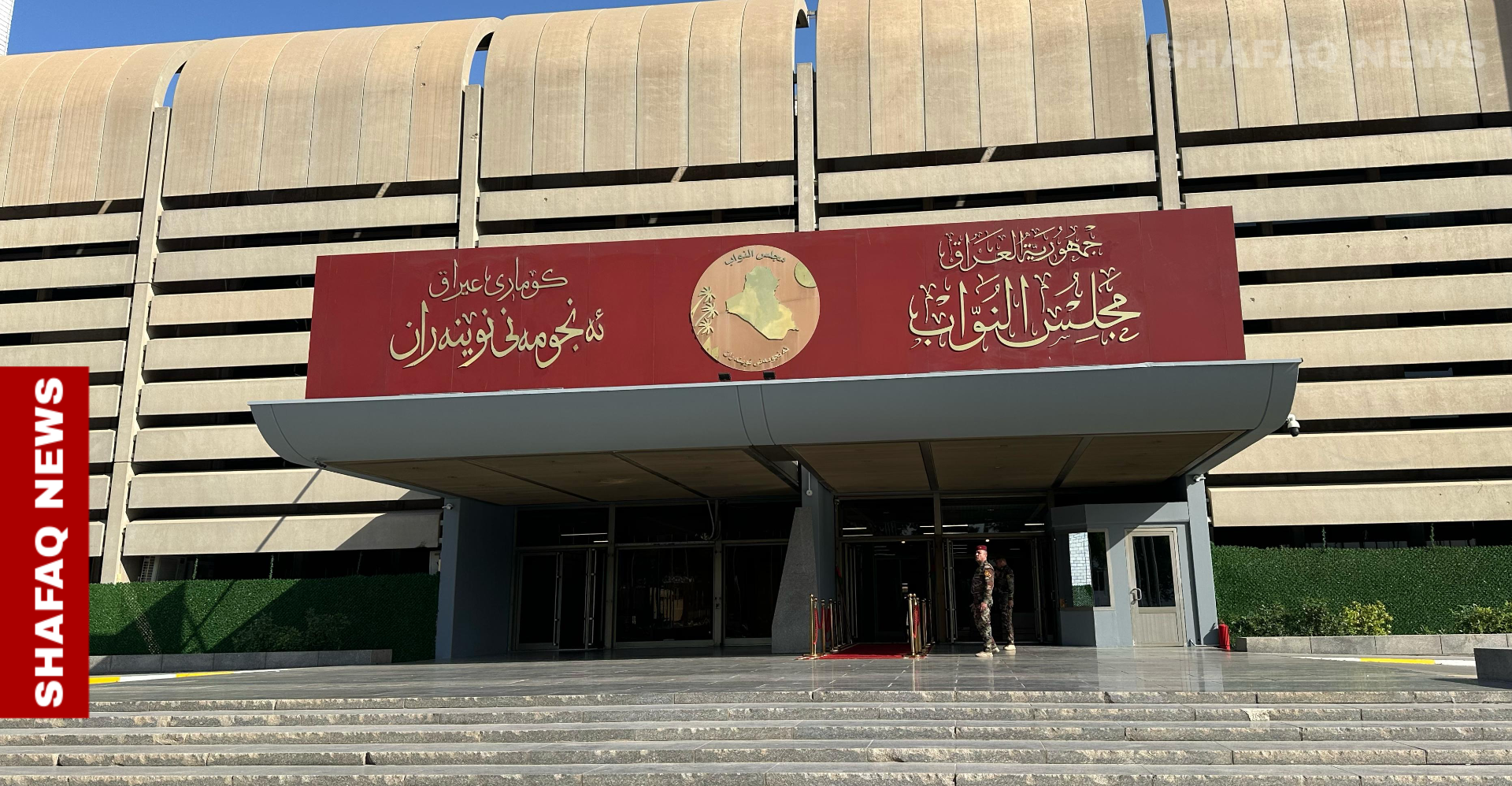
Iraq's political system reserves seats for minority communities in parliament and provincial councils — nine of 329 seats in the Council of Representatives are allocated to minorities: five for Christians, one each for Yazidis, Sabean Mandaeans, Shabaks, and Feyli Kurds.
This sounds like inclusion. In practice, it has become a mechanism of controlled marginalization.
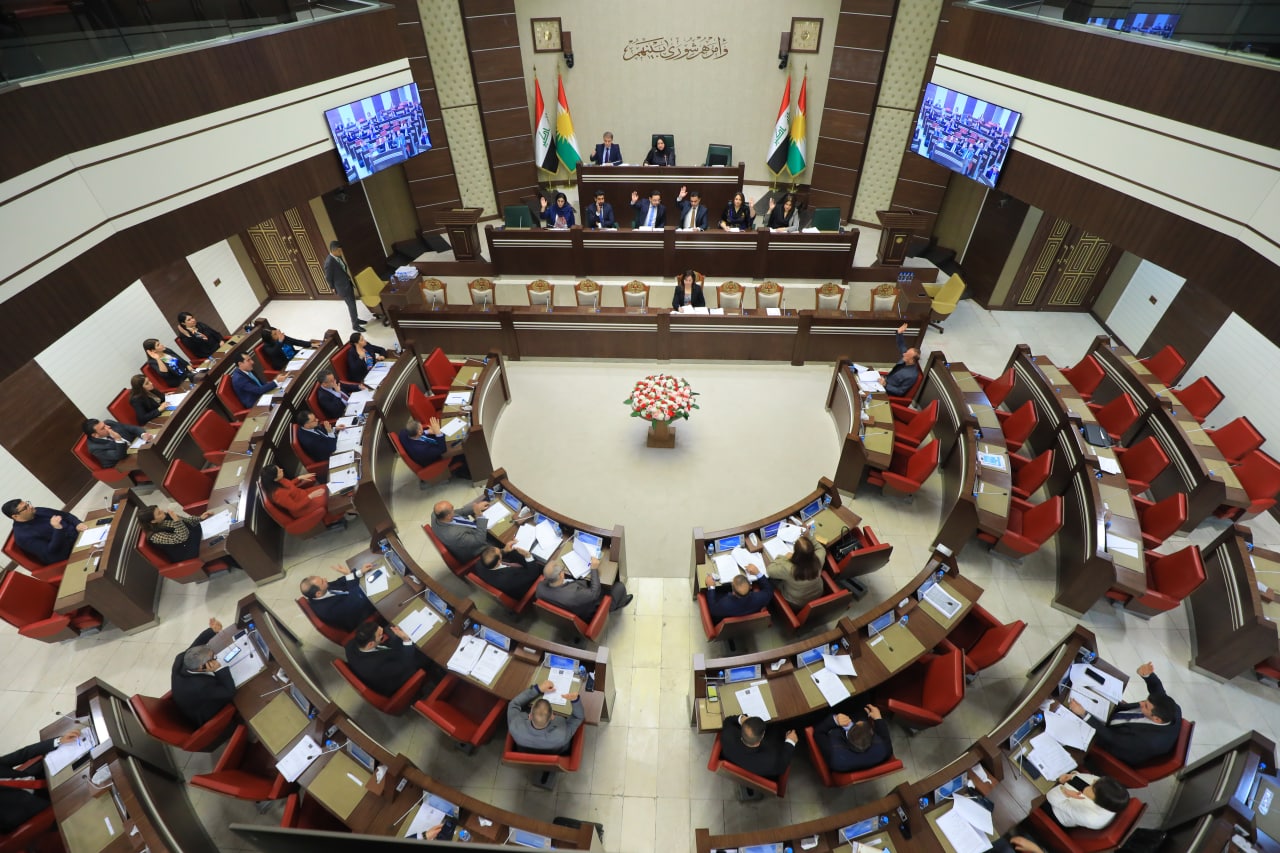
In February 2024, the Federal Supreme Court ruled that the Kurdistan Region's election law — which had reserved 11 seats for Turkmen, Christians, and Armenian minorities since 1992 — was unconstitutional. The ruling eliminated those seats, ending three decades of guaranteed minority representation in the KRI parliament at a stroke. In May 2024, the court partially reversed itself, reinstating five quota seats for Christians and Turkmen — but the net result was still a significant loss of representation.
The December 2023 provincial elections illustrated another dimension of the quota problem. A U.S.-designated human rights abuser — Rayan al-Kildani, whose brigade had previously been accused of "persecution of religious minorities" — led a political bloc to sweep all four Christian quota seats in Baghdad, Nineveh, Kirkuk, and Basra. The seats designed to protect Christian representation were won by a militia-linked actor who had been sanctioned for persecuting Christians.
Quota seats without independent candidate selection are not minority representation. They are minority-labeled seats controlled by the dominant political system.
The 2024 Census: Invisible by Design
Iraq conducted its first general population census in decades in 2024. The results revealed something significant — and troubling: the number of religious minorities was notably absent from the official results. There was no explicit breakdown for religious minorities in Iraq's population data.
This absence is not neutral. Minority representation, resource allocation, and rights claims all depend partly on demographic data. A census that counts everyone but does not report minority populations by religion creates a statistical foundation that makes minority rights claims harder to quantify and therefore harder to enforce.
Whether intentional or not, the effect is the same: minorities become administratively invisible in a country where administrative visibility is a prerequisite for political representation and resource access.
Property, Land, and Demographic Change
One of the most concrete failures of constitutional implementation involves property rights. Iraq's constitution protects property rights and prohibits forced displacement. The reality on the ground has been the opposite for minority communities across the country.
In February 2024, the Iraqi Ministry of Justice established a new committee to examine real estate claims of religious minorities — an acknowledgment that the problem exists. But committees established to examine claims are not the same as mechanisms for restoring property. In the Nineveh Plains, in Sinjar, in Kirkuk, minority communities have documented systematic property seizures, demographic manipulation, and obstruction of return that have continued years after ISIS was defeated.
The constitutional protection is real. The enforcement is not.
Language, Education, and Cultural Rights
The constitution guarantees the right of communities to educate their children in their mother tongues. For Turkmen, whose language is distinct from both Arabic and Kurdish, this guarantee has been inconsistently honored — particularly in disputed areas where control shifts between Baghdad and Erbil and educational administration follows political control rather than community needs.
Minority Rights Group International has documented violations of economic, social, and cultural rights affecting Iraq's minorities, including inadequate access to public services, restrictions on education in minority languages, and limited access to employment in areas where demographic changes have reduced minority community presence below critical mass.
Conclusion
Iraq's constitution is not the problem. It contains genuine protections — more than many constitutions in the region. The problem is the consistent, documented, institutionally acknowledged failure to implement those protections in a political system that treats minority rights as secondary to the interests of dominant communities, armed groups, and political parties.
The head of the Iraqi High Commission for Human Rights said it plainly: "The laws guarantee rights, but they are not applied." When that statement describes the assessment of the state's own human rights body, the conclusion is unavoidable.
Iraq's minorities live in a country with a constitution that protects them and a political system that does not. The distance between those two realities is measured in displacement, in lost property, in eliminated quota seats, in census data that makes them invisible, and in decades of waiting for implementation that keeps being described as forthcoming.
Rights on paper are not rights. They are promises. And Iraq's minorities have been waiting for those promises to be kept for twenty years.
Independent Research & Analysis
Hussein Monitor
Hussein Monitor publishes in-depth field research on Iraqi minority rights, post-ISIS accountability, and the human cost of impunity. By Hussein Zainulabdeen — former UNAMI Liaison Officer and independent researcher.


Comments
Post a Comment