Five Years of the Yazidi Survivors Law
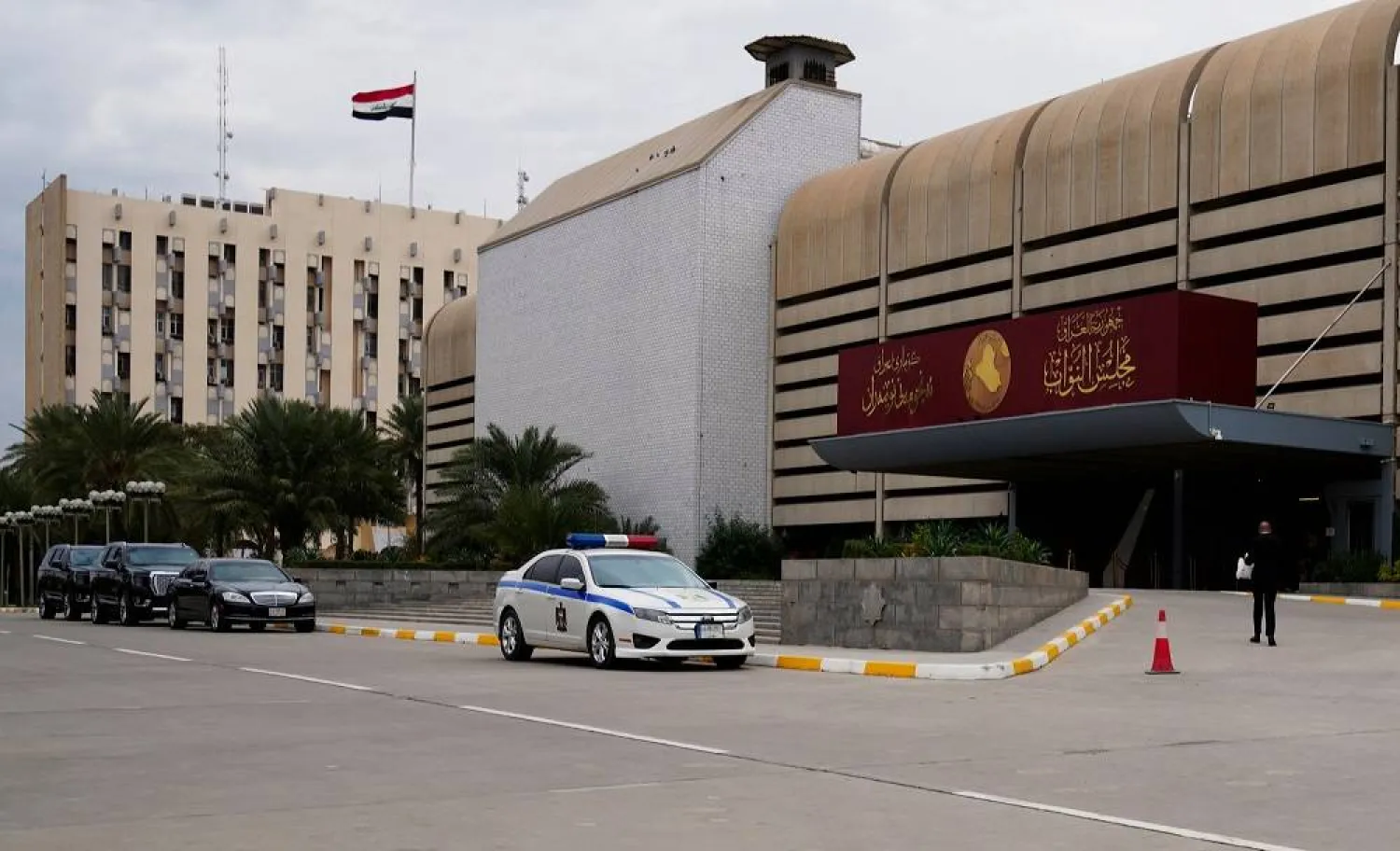
Five Years of the Yazidi Survivors Law: The Case for Substantive Amendments
By Hussein Zainulabdeen | Independent Researcher — Iraqi Minority Rights | husseinmonitor.com
On March 1, 2021, Iraq's parliament passed the Yazidi Survivors Law No. 8 of 2021 — a moment widely described as historic for the entire region. Today, five years after its enactment and three years into its implementation, monitoring reports from local and international bodies converge on a single conclusion: the law has genuinely changed the lives of hundreds of survivors, yet it remains far from delivering on its full promise.
The gap no longer needs to be proven. It is documented, quantified, and published. What is missing is the legislative will to close it.
What Has Actually Been Achieved
No honest case for amendment can begin without acknowledging what has been accomplished. As of January 2026, at least 2,216 survivors were receiving the monthly compensation payments established by the law. A survey by the Coalition for Just Reparations found that 72% of beneficiaries said the payments helped them feel more integrated into society, while 79% reported that compensation positively affected how their families and communities treat them.
These numbers prove that administrative reparation is possible in Iraq — that the state can, when the will exists, translate legal recognition into tangible improvement in survivors' lives. But partial success does not excuse the structural gaps.
"Ink on Paper"? What the 2026 Reports Say
In the past few months alone, three monitoring bodies have documented the same failures:
- The UN CEDAW Committee (February 2026): In its concluding observations on Iraq's eighth periodic report, the Committee expressed concern that the law's implementation imposes "burdensome and stigmatizing procedures" on survivors — chief among them the requirement to file a judicial complaint to access reparations — alongside the absence of transparent data on compensation granted.
- The Coalition for Just Reparations (March 2026): Its fifth monitoring report documented the continued demand for a criminal investigation despite no legal basis for the requirement, elevated evidentiary thresholds, and the absence of written, dated, and reasoned decisions across the application, review, and appeals stages.
- Yazda: Its assessment, built on the views of more than 600 survivors and 34 civil society organizations, reached the same conclusion — a law that is advanced on paper, faltering in the details of its application.
"Merely ink on paper" — that is how survivors described their doubts about the commitment to deliver reparations. The task of Iraq's legislators today is to prove them wrong.
The Forgotten Survivors: The Inclusion Gap
Article 2 of the law extends its provisions to Turkmen, Christian, and Shabak women and girls subjected to the same crimes — an important legislative recognition that the genocide targeted more than one community. But the text is one thing; actual access is another.
Of roughly 1,300 abducted Turkmen, only 48 have ever been freed. The fate of hundreds remains unknown to this day. And the number of non-Yazidi survivors actually enrolled under the law does not begin to reflect the true scale of the victims.
The parliamentary Human Rights Committee prepared an amendment to include Turkmen survivors who were under eighteen at the time of their abduction, granting them the same entitlements as other survivors. Yet the amendment has remained stalled without a vote, amid public warnings that "political wills" are blocking its passage. Leaving this amendment in a drawer is not a procedural matter — it is a painful message to survivors who have waited twelve years for justice.
An honest word is owed here to legitimate concerns within parts of the Yazidi community, who fear that amendments — particularly attempts to change the law's name — could dilute the specificity of the genocide that targeted Yazidis above all. That concern deserves respect, not dismissal. What is needed is not a rewriting of the law, nor any change to its name or to the centrality of the Yazidi genocide within it, but its strengthening so that it reaches every survivor it already names. Justice extended to a Turkmen, Shabak, or Christian survivor takes nothing away from the rights of a Yazidi survivor.
The Missing Link: Criminalizing Genocide
The deepest gap lies outside the text of the law itself: Iraq has still not enacted national legislation criminalizing genocide, crimes against humanity, and war crimes. The result is that the perpetrators of the worst crimes against survivors are prosecuted under counter-terrorism law alone — their crimes never called by their true names, and survivors never granted the standing of victims in trials that reflect what was done to them.
The urgency of this file grows with the transfer of thousands of ISIS-linked detainees from Syria to Iraq for investigation under the current legal framework. The window to hold them accountable for genocide — not merely "terrorism" — is closing by the day.
What Must Change
Based on the latest monitoring reports and international reparation standards, the minimum substantive amendments required are:
- Explicitly abolish the judicial complaint and criminal investigation requirement — by adding clear language accepting a survivor's testimony and the records of state bodies and civil society organizations as sufficient evidence, consistent with Article 5 of the law and international evidentiary standards for reparation programs.
- Pass the stalled inclusion amendment — by voting to include Turkmen survivors who were minors at the time of abduction, and guaranteeing real access for survivors of all communities through field offices and outreach campaigns in their languages and areas.
- Enact national legislation criminalizing international crimes — incorporating genocide, crimes against humanity, and war crimes into Iraq's penal code.
- Require the General Directorate of Survivors' Affairs to issue written, reasoned decisions — on approval, rejection, and appeal, alongside regular published data on applications, beneficiaries, and rejection grounds, disaggregated by community.
- Activate the non-financial reparation measures — from health and psychosocial rehabilitation centers, to land, housing, and education entitlements, to memorialization and serious action on the file of the missing.
- Guarantee sustainable funding — through a legally protected annual budget line, immune to political fluctuation, securing the continuity of payments and the expansion of services.
Conclusion
The Yazidi Survivors Law is not a failed text in need of demolition — it is an unfinished achievement in need of completion. Five years have been enough to identify its flaws with precision, and the 2026 reports have placed a ready-made roadmap before Iraq's legislators.
What is needed now is political will that rises above narrow calculations — will that passes the substantive amendments and transforms the law from a partial promise into full justice: for every survivor, from every community, without exception.
A law that survives on paper is not the same as a law that reaches its survivors. Five years is long enough to know the difference.
Sources:
- Yazidi Survivors Law No. 8 of 2021 — Iraqi Official Gazette, March 2021
- Coalition for Just Reparations (C4JR) — Fifth YSL Monitoring Report, "More Than Ink on Paper" — March 2026
- UN Committee on the Elimination of Discrimination against Women (CEDAW) — Concluding Observations on Iraq's Eighth Periodic Report (CEDAW/C/IRQ/CO/8) — February 2026
- Yazda — "Implementing the Yazidi Survivors Law: A Review by and for Yazidi Survivors"
- Joint Statement on the Occasion of 5 Years Since the Enactment of the Yazidi Survivors Law — Global Centre for the Responsibility to Protect and partners — March 2026
- Joint Statement on the Implementation of the Yazidi Survivors Law — ReliefWeb / international human rights organizations
- Turkmen Rescue Foundation (TRF) — Documentation and data on abducted Turkmen and ISIS victims
- Kirkuk Now — Statistics on abducted Turkmen and coverage of the proposed YSL amendment
- Statements by the Iraqi Parliamentary Human Rights Committee on the Turkmen survivors inclusion amendment — Alsumaria News
Independent Research & Analysis
Hussein Monitor
Hussein Monitor publishes in-depth field research on Iraqi minority rights, post-ISIS accountability, and the human cost of impunity. By Hussein Zainulabdeen — former UNAMI Liaison Officer and independent researcher.
VISIT HUSSEIN MONITOR → Subscribe on Substack


Comments
Post a Comment