Iraq Before the UN Human Rights Council: Promises Without Accountability
By Hussein Zainulabdeen | Independent Researcher — Iraqi Minority Rights | husseinmonitor.com
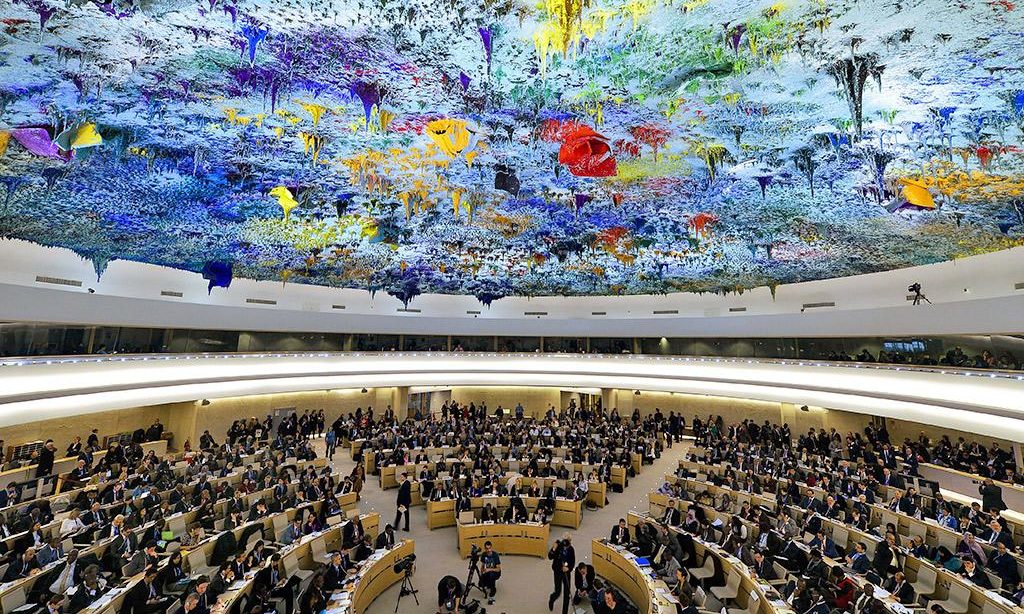
In January 2025, Iraq appeared before the United Nations Human Rights Council for its fourth Universal Periodic Review — a moment that should have marked a turning point. It did not.
The UPR process, designed to hold governments accountable to their international human rights obligations, produced 263 recommendations from 93 countries. Iraq accepted 181 of them. On paper, that looks like progress. In practice, it continues a pattern that anyone who has watched Iraq's human rights record knows well: accept the recommendations, ignore the implementation.
What the UN Recommended
The recommendations issued to Iraq in January 2025 were not new. Many had appeared in the previous cycle — in 2019 — and in the cycle before that. They included:
- Imposing a moratorium on executions and ending the use of the death penalty following unfair trials
- Repealing or reforming laws that enable impunity for gender-based violence, including provisions that allow violent acts to be mitigated if committed for so-called "honorable motives"
- Ensuring freedom of expression and peaceful protest
- Strengthening the independence of the Iraqi High Commission for Human Rights
- Guaranteeing equal access to services for displaced communities and minorities
- Ratifying outstanding international human rights treaties, including the Rome Statute of the International Criminal Court
These are not radical demands. They are baseline obligations that Iraq has signed up to — and repeatedly failed to meet.
The Pattern: Accept, Then Forget
Iraq's acceptance rate of 181 out of 263 recommendations sounds significant. But context matters.
That acceptance rate actually represents a 26% decrease compared to the previous cycle. Iraq rejected all recommendations calling for the abolition of capital punishment — the same position it held in 2019. And perhaps most telling: the Iraqi government requested that the UN Assistance Mission for Iraq (UNAMI) — the body responsible for monitoring human rights on the ground — terminate its mandate permanently by the end of 2025.
A government serious about human rights reform does not expel the international body tasked with monitoring it.
What This Means for Minorities
For Iraq's minority communities — Turkmen, Yazidis, Christians, Shabaks, Mandaeans — the UPR process has become a ritual of disappointment.
The recommendations on minority rights, displacement, and access to services are accepted year after year. The Yazidi Survivors Law of 2021 — often cited as evidence of progress — remains partially implemented, with thousands of eligible survivors still waiting for compensation. The Turkmen community, despite comprising millions of Iraq's population, holds no sovereign or senior ministerial positions. Christians, once numbering 1.4 million, have declined to fewer than 300,000.
As of 2026, over 2,700 Yazidis remain missing. Return to Sinjar is blocked by competing armed factions. Mass grave excavations have stopped with UNITAD's closure. The evidence exists. The justice does not.
The Structural Problem
Iraq's human rights crisis is not primarily a problem of lacking laws or recommendations. The country has laws. It has a constitution. It has accepted hundreds of UN recommendations.
The problem is structural impunity.
State-affiliated armed groups — the Popular Mobilization Forces and their affiliated militias — operate outside the rule of law with near-total impunity. Security forces torture with minimal accountability. Journalists and activists are assassinated, and investigations rarely reach conclusion. The Iraqi High Commission for Human Rights, the body meant to provide independent oversight, has been criticized for lacking genuine independence from the government.
In this environment, accepted recommendations are political performance, not political commitment.
A Test Coming: Will Iraq Act Before the Next Review?
Iraq now has until its fifth UPR cycle to demonstrate implementation of the recommendations it accepted. Based on past performance, the prognosis is not encouraging.
The indicators to watch:
- Will Iraq pass meaningful legislation protecting displaced minorities?
- Will the Yazidi Survivors Law be extended to include Turkmen, Christian, and other minority survivors?
- Will militia accountability reach the courts?
- Will journalists and activists be protected rather than prosecuted?
These are not hypothetical questions. They are the difference between a government that takes its human rights obligations seriously and one that treats the UN review process as a box to check every four years.
Conclusion
The Universal Periodic Review is one of the few mechanisms the international community has to hold governments like Iraq's accountable. But accountability requires more than recommendations. It requires consequences.
As long as Iraq can accept 181 recommendations, expel the monitoring mission, and face no meaningful international consequence — the cycle will continue. The words will accumulate in Geneva. The suffering will accumulate in Sinjar, in Tal Afar, in Baghdad's activist communities, and in the homes of families still waiting for news of the missing.
Promises without accountability are not progress. They are documentation of failure.
Independent Research & Analysis
Hussein Monitor
Hussein Monitor publishes in-depth field research on Iraqi minority rights, post-ISIS accountability, and the human cost of impunity. By Hussein Zainulabdeen — former UNAMI Liaison Officer and independent researcher.


Comments
Post a Comment